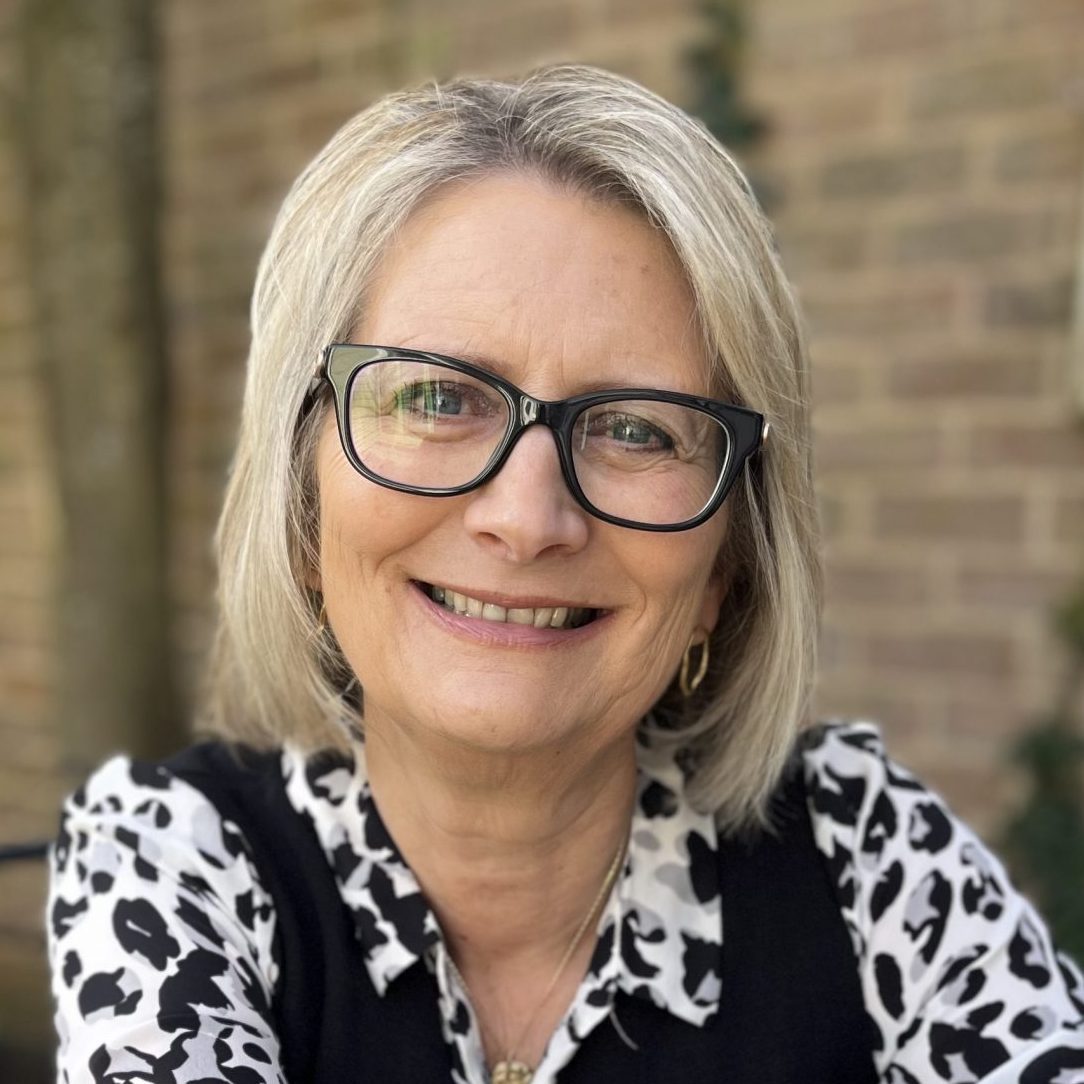
Kay Hoggett
Coach, counsellor, Consultant, SUPERVISOR
Market harborough, leicesterSHIRE, city of london & ONLINE
Supervision
A reflective and supportive space for coaches, counsellors and dual practitioners.
I offer a safe space for honest and useful conversations about all aspects of your practice. A current supervisee has kindly said this about our supervision:
"I'm very grateful to be working with Kay as my supervisor. She is highly experienced, warm and personable, and manages to ask such great questions that help me with my practice. I always emerge from supervision feeling motivated and 'held', both professionally and personally." Dr Mish Seabrook
We can meet at my premises near Market Harborough, or online via the Zoom platform. I offer a complimentary initial consultation to understand what you are looking for in your supervision and how I can help. I'm looking forward to meeting you!

My philosophy of supervision
What is supervision? There are probably as many answers to this question as there are practitioners. I have tried to capture here my own answer to the question.
Normative, formative, restorative
One framework that I find valuable is Inskipp and Proctor's (1995) 'triangle' model. This suggests that effective supervision comprises three key functions: normative, formative and restorative. The normative function is concerned with ethical practice and monitoring the work to ensure it is in line with professional standards (for me the BACP Ethical Framework) and legal requirements. This function of course encompasses a wide range of issues, from professional competence to boundary management and GDPR.
The formative function is concerned with the learning and development of the supervisee, including skills, knowledge, abilities and personal qualities. The restorative (or supportive) function relates to that aspect of the supervisory relationship that allows the supervisee to feel heard and supported, part of a collaboration in which issues can be safely raised and successes joyfully celebrated.
For me, the last of these is the starting point. Supervision should not feel like an inquisition or an exam. It is a collaborative process in which you need to feel able to explore your thoughts and feelings about your client work, without fear of a judgemental response. We need to pay significant attention to your own wellbeing - you are after all the one that is in the room with your clients. In this environment, learning can flourish. Learning and development is likely to come more from your experience and conclusions from collaborative reflection than from me giving instructions as to what to do. Finally, the normative function can only be effective if you feel able to tell me what is happening in your client work. Ethical issues do arise, and it is essential that we can talk about them. Usually they are complex and nuanced, and we will explore the balance of the six principles of the Ethical Framework to arrive at a way forward. Rarely, a supervisee will act in a way that is contrary to the requirements of the Framework, and in this situation clarity is important - I will be clear as to what the issue is, and the options we have.
I have also studied Page and Wosket's Cyclical Model and Hawkins' and Shohet's Seven-Eyed Model, both of which provide useful ways of looking at supervision. I support Myira Khan's concept of adding an eighth eye focusing on identity and anti-oppression.
My personal beliefs and values of supervision
Whilst the Innskip and Proctor framework is valuable, not least in helping is to ensure we are paying attention to each of the three functions in our supervision, for me it does not quite capture the whole. I agree with Carroll (2014) that the relational foundation of supervision is key - this accords with my own beliefs, values and experience of the conditions in which people do their best work. Just as with our clients, there needs to be a relationship of trust, and part of my role is to create the conditions in which trust can flourish.
I see supervision as essentially a process of learning through collaborative reflection. This mode of learning can be ultimately transformative, rather than being just about the exchange of knowledge and the acquisition of skills. The goal of supervision is to support the development of ethical maturity, wisdom and the practitioner's own 'internal supervisor'.
The request from me to you is simple but profound: 'Tell me about your work. Be transparent. Let us review it together'.
Recent supervision-related CPD
I am committed to developing my supervision practice by participating in CPD that broadens my thinking and, I hope, enriches the experience of my supervisees. Recent courses include:
Anti Oppressive Supervision with Myira Khan.
A thought-provoking day of reflection and exploration on what it means to be an anti oppressive supervisor, with a widely-acknowledged expert in the field of anti oppressive practice.
The Supervisory Relationship with Robin Shohet
A workshop that deepened my commitment to a stance of curosity and empathy within the supervisory relationship. Sadly, some of the workshop examples strayed into a very blase approach to ethics, safeguarding and client wellbeing that did not sit well with me, which was very disappointing as some of the learning was certainly valuable.
My background as a supervisor
Perhaps you want to know more about my background as it relates to being a supervisor, so that you can think about how it fits (or not!) with what you are looking for. Here are some of the threads of my history ....
People management
For thirty years I was in leadership roles, responsible for teams of people. I believe that people are able to do their best work when there is the right balance of support, development and challenge, and that this balance is different for everyone. As a supervisor, I would not be your manager of course. But I would bring the same sense that you (and through you, your clients) are at the centre of my attention, and that your development in and experience of your work is important.
Private practice
I have been self-employed for several decades, originally prompted by a need to take care of my own career when corporate employers did not allow people (mothers!) to be both part time and in a senior role. I became a coach during that period, and when I subsequently qualified as a counsellor it was natural for me to go into private practice. If you are in private practice, or want to be, I am well-placed to support you.
Counselling charity and clinical leadership
Leicester Counselling Centre (LCC) is a charity providing affordable long-term counselling to the 1 million population of Leicester, Leicestershire and Rutland, with a counsellor team of about 70, half qualified and half on placement. It's a really positive place, with a wonderful ethos and a strong foundation in ethical and professional practice. I joined LCC as a qualified volunteer in 2017, and became a trained assessor for new clients in 2018. LCC needed people with leadership and organisational experience to join the charity board, so I became a voluntary trustee in 2018. I took on the role of Board Chair in 2019, a position which became unexpectedly challenging in 2020 with the Covid-19 pandemic, and some subsequent staffing issues. In this role I have developed extensive experience of all aspects of running a counselling organisation, including policies, procedures, safeguarding & risk management, and the development of trainees. I am also line manager for the CEO and Clinical Lead, and strive to offer a safe space for reflection, exploration of challenges and professional development.
In 2021, circumstances at LCC meant I stepped into the CEO and Clinical Lead role for ten months. This role was my first experience of providing clinical support to other counsellors, and I found it very rewarding. The work varied from liaising with placement providers and funders, to supporting placement counsellors ahead of their first client session, from writing placement reports, to working through complex ethical dilemmas with experienced counsellors. I hope and believe that I am a wiser person and practitioner from all of my experience in LCC and that this will enhance your experience of supervision with me.
This intensive experience of clinical leadership led me in 2022 to supervision training, initially with a short in-person course. I then completed a Certificate in Clinical Supervision (Sue Pattison Training, 2023).
Coaching experience
I've been a coach for over twenty-five years, and hope to be able to support you in your coaching work, if that is part of your practice. It also means that I adopt a coaching approach in all of my supervisory work - in which a major part of my role is to be your thinking partner, support and ally.
Working as a consultant in my own business, I was first asked in 1999 by a financial services company to provide individual coaching to a group of technical specialists who were transitioning into team leadership roles. At that time, coaching was not common outside of sport, and the range of courses and resources available now did not exist. I undertook the assignment using my own experience of leadership and management, learnings from my psychology of leadership course (Cranfield School of Management, 1994) and a powerful belief that the coaching would work best through a process of exploration rather than me telling the coachees what to do. That was the start of my coaching career and I subsequently completed a Diploma in NLP (2010) and a Postgraduate Diploma in Coaching (UEL, 2013).
On my PGDip we were (rightly) taught that we might encounter coaching clients whose barriers to growth seemed to arise from aspects of their personal history, or who sometimes seemed to struggle with issues like anxiety or depression, or whose personal history seemed complex. In this case we should work only with 'pure coaching issues' or refer the client on to a counsellor or psychotherapist. I realised that this caveat applies to every person and every client - powerfully motivated to be able to work fluidly and ethically with the 'whole person', I decided to embark on counselling training.
Counselling experience
I undertook a counselling skills course in 2014, then a Diploma in Therapeutic Counselling (CPCAB, via Peterborough College, 2017). My course was integrative, with a humanistic stance and a core in the person-centred approach. We also studied other modalities to a more limited level, including psychodynamic, transactional analysis and creative approaches. One strength of the CPCAB curriculum was an emphasis on equality and diversity through an inter-sectional lens; we were required to explore our own prejudices, a painful but developmental experience. My placements were at CRUSE, with whom I completed a Certificate in Bereavement Care, and at a children and young person's counselling charity (CASY) with whom I completed a Certificate in Working with Children and Young People.
My client work (4,000 hours plus) has included a very broad range of mental health and wellbeing issues. I hold a Master Practitioner Diploma in Eating Disorders and Obesity (National Centre for Eating Disorders, accredited by British Psychological Society, 2017). I still work with clients struggling with eating disorders and disordered eating, as well as training and supervising other practitioners in this work. This work requires significant cognitive-behavioural and psycho-educational interventions, which I initially found difficult to reconcile with my person-centred values, but which have now become embedded as valuable approaches for some clients in my wider work.
I'd love to hear about your counselling, psychotherapy, coaching or helping practice, and think about how we might work together.
Training and development
During my previous career I delivered training in team leadership, project management and change management. I now occasionally deliver training courses with a colleague; recent courses include 'Certificate in Working with Eating Disorders' and 'Counsellor to Coach'. Developing and delivering training courses has deepened my knowledge in specific aspects of counselling and coaching, as well as reinforcing my skills in supporting others to learn and develop.
BACP Accreditation
I achieved my BACP accreditation in 2020 and learned a lot through the process, partly because I initially received a deferral! I have since supported two colleagues through their accreditations and was very happy that they were both successful first time. I have made it a priority to be informed about SCoPEd and its implications for our profession, and am very familiar with the current (until February 2026) and new (from February 2026) routes to accreditation and senior accreditation.
If you would like support in submitting an accreditation application I will be very happy to assist you in that, as part of our supervision.
Ethical Framework
I believe that the BACP Ethical Framework (including the new 2025/26 version) is a powerful, important and positive influence on our profession, and amongst the best work that BACP has done. I fully uphold its principles and guidance, and it is the bedrock for my supervision work.
Women in the counselling profession
An important value for me is around the role of women as practitioners, and how this is reflected in issues of professional status and earnings. Here are some (fairly ill-defined) thoughts on this subject
- like many other professions in which women are in the majority, counselling is often poorly paid. I think these facts are connected.
- one of the ways in which this plays out is that placement counsellors are expected to work essentially for free, and charities often rely on even qualified counsellors working for little or nothing. (As a charity chair, I do of course understand the pressures that charities are under to limit their expenditure)
- conversely, many of the leaders, writers and persons with high status in the profession are men. Which is interesting, isn't it?
- I am not anti-men - I have always had great relationships with male family, friends and colleagues and open-heartedly welcome male clients and supervisees. My concern is with systems and structures that disadvantage women (and others), and sadly our profession is not immune to these.
- unfortunately SCoPEd has the potential to reinforce existing structures (more specifically on socio-economic background than on gender) because it privileges those who have access to postgraduate academic courses
I try to live my values in relation to these issues, but can't claim to have done much. My tiny contributions include:
- I had come from a corporate background, in which whilst there was structural sexism, there was at least some attempt to think about gendered power and privilege. I was so shocked as a trainee to see that this didn't seem to be being thought about in the counselling profession that I wrote a letter to Therapy Today, which was published.
- In groups of practitioners, challenging narratives that promote the idea that counsellors (who are predominantly women) should be working for longer in low-pay or no-pay roles before they can legitimately earn a living
- A significant factor in my decision to take on the Chair role at Leicester Counselling Centre was to model being a woman in the (theoretically) most senior role in the organisation. Previously, this role and that of vice-Chair were held by men, while the weight of day to day (CEO) responsibility was held by a woman, and 90% of the counsellors were women.
- As Chair of Leicester Counselling Centre, devising and leading the implementation of the 'Qualified Counsellor Payment Scheme' which ensured that placement counsellors could quickly move into receiving some payment for their work once qualified.
If these issues are important to you, exploration of how they appear in your life and your client work can be part of our supervision work. If they are not, that is fine too.
Get in touch
Feel free to contact me using this form if you have any questions about how we might work together. We can discuss the reasons you are thinking of coming to me, whether it could be helpful for you and whether I am the right person to help.
You can also contact me by phone 07976 419793 or email at kay.hoggett@hoggettconsulting.com.
All enquiries are usually answered within 48 hours, and all contact is strictly confidential. Find out more by reading my Privacy Policy.
Some frequently asked questions
Many therapists tend to view Counselling as ‘short-term’ work; when someone has a problem that can be looked at and discussed in a clearly-resolvable way. This work often requires undertaking sessions for a certain number of weeks, to explore, discover and clarify a way forward. Therapy is a word used more to describe ‘long-term’ work; discussion that tends towards substantial issues and things that might be life-changing on a deeper level.
Whether counselling or therapy work best as a short- or long-term option depends on the client though, and the difficulties they are facing. In some cases counselling can prove helpful as a continuing, longer-term option, or therapy can help resolve an issue in just a few sessions.
There’s no fixed or ideal length of time for the counselling process; it varies from person to person and will often depend on the depth of the issues they are facing. While I can work on an open-ended basis with clients, I find it is helpful for us to both agree before we start on undertaking a certian nunebr of sessions and reviewing where we are at once we reach that point. You are able to decide how long your therapy willl last, and in return my aim is to make sure therapy continues for only as long as it is of benefit to you.
This depends on what your needs are. Some people find that after only a very few sessions they have some clarity and focus and are ready to end the therapy. Other people value the ongoing support and relationship with me and will continue to come for weeks, months, or even years. There is no 'one-size-fits-all' when it comes to therapy.
My aim is to offer you a first appointment, known as an assessment session within 1-2 weeks, this is once we receive your completed client pack back. However, waiting times will vary according to pressure on our resources, your own availability and the service you seek.
An appointment to our short term counselling, which is not subsidised, can be offered within about one week.
Confidentiality is one of the main ways in which therapy differs from many other forms of helping - for example, talking to friends or family can rarely offer the same degree of confidentiality as talking to a counsellor. Because of this confidentiality, you will find that - as you get used to coming for therapy - you are freer to talk about whatever you wish to.
No therapist can offer 100% confidentiality: there are some situations where the law requires disclosure of risk (e.g. certain child protection issues) and in common with most other therapists, there are some situations where I may not be able to keep total confidentiality. In particular, if someone tells me that they are thinking of harming themselves in a way that I believe puts them at serious risk, or if someone tells me that they are doing something that could put others at risk, I may not be able to keep such information confidential. However, breaking confidentiality is rare, and only happens after talking to the person concerned.
When you come for counselling it's important that you feel free to talk about whatever is important to you. Sometimes, you may not be clear what those issues are. Having a friend or family member with you is not usually helpful because they may have their own agenda for you. Even if this is just that they want to be supportive, or want you to 'get better', this agenda can prevent us opening issues up. When you come for therapy, you may need to explore thoughts or behaviours about which you feel ashamed or embarrassed and you may censor yourself so as not to hurt someone, or you may find that what they want you to talk about is not really what you need to discuss.
Sometimes, family/friends can even be part of an underlying issue which needs to be aired and discussed. Usually, people who ask this question are nervous about coming for a session alone, or they are anxious for the person who is thinking about arranging sessions. This anxiety is quite normal, and you will not be forced to talk about anything you feel uncomfortable about - but you do need to be able to talk about whatever is important. For this reason, I do not see clients accompanied by friends or family